
A 100 KiB Solana program with exactly 100 KiB of reserved code space would have needed 0.52190396 SOL across its two permanent loader accounts in our November 22, 2026 mainnet reading. That's a balance tied to the deployment. The payer also needs funds available while the code uploads and enough SOL to pay transaction fees.
The estimate below is for a new upgradeable loader-v3 program. The distinction that matters most is the space you reserve. The same compiled file produces a different budget if the release allocates extra room for future code.
Turn the binary into account sizes
Measure the compiled .so file in bytes. In this example, 100 KiB means 102,400 bytes. Loader-v3 uses a 36-byte Program account pointing to a ProgramData account. ProgramData adds 45 bytes of metadata to the reserved code space. With no spare capacity, the two data lengths are therefore 36 and 102,445 bytes. Loader-v3 account layout
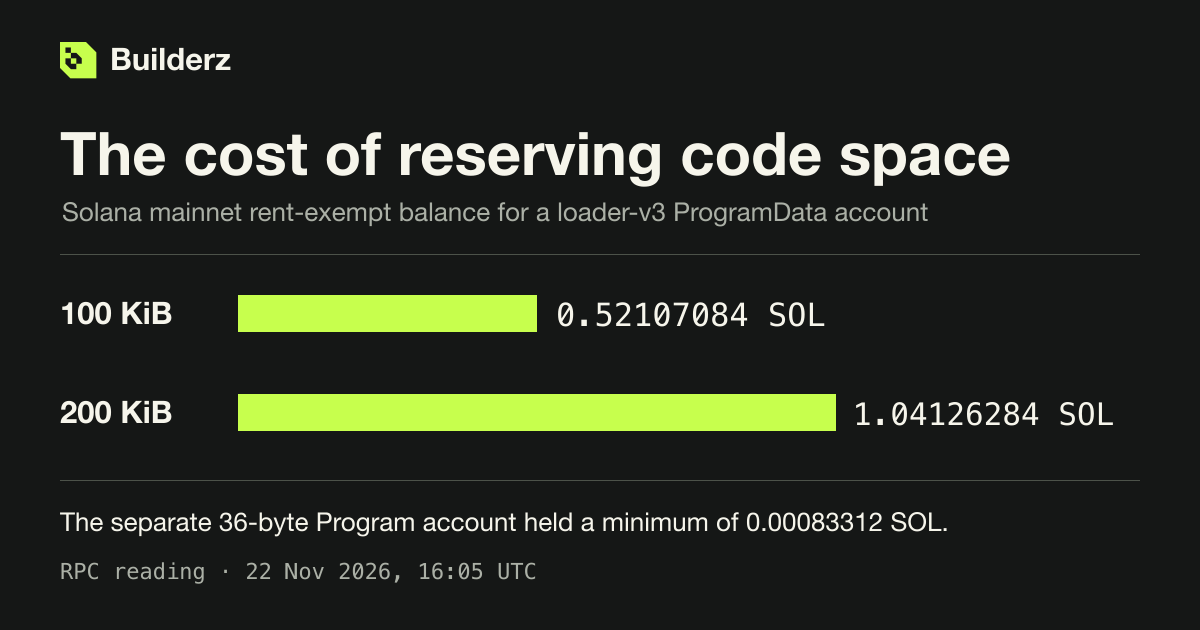
At 16:05 UTC on November 22 we queried the public mainnet RPC using getMinimumBalanceForRentExemption with finalized commitment. Here are the responses for three account sizes. Solana rent-exemption RPC reference
- 36 bytes returned 833,120 lamports for the Program account.
- 102,445 bytes returned 521,070,840 lamports for ProgramData with 100 KiB reserved.
- 204,845 bytes returned 1,041,262,840 lamports for ProgramData with 200 KiB reserved.
The extra 100 KiB would have tied up another 0.520192 SOL at that reading. The Program account stays the same size. To reproduce the estimate, look up each length in the Solana rent calculator, check whether it is displaying live data, and add only the two rows for your chosen allocation.
Work out what the payer needs during upload
The loader stages the binary in a buffer before it places the code in ProgramData. A loader-v3 buffer holding the example file has 37 bytes of metadata plus 102,400 bytes of code. Put that temporary balance on the release worksheet with the name of the account that funded it. Buffer lamports can help fund ProgramData during deployment. Adding both full balances as permanent expenses would count some of the same SOL twice. Solana program deployment lifecycle
Use a rehearsal with the same artifact, CLI settings, and reserved capacity to record when each account is funded. Track the payer's lowest balance during the sequence as well as its final balance. An interrupted upload can leave funds in a buffer. Identify that buffer before funding another attempt.
Keep the fee line separate
Writing the binary takes transactions, and each charged transaction has a fee. A release with more upload attempts can consume more SOL even when the final accounts have identical sizes. In a rehearsal, collect the fee from each landed transaction, including any that failed on chain. Record the priority-fee settings alongside the total so someone can repeat the estimate for the intended cluster. Solana transaction fees
Put three figures side by side in the release request. How much SOL will stay in program accounts? How much must the payer have available at the busiest point? What fees do you expect to spend? An upgrade to an existing program needs a fresh calculation using its current allocation and funded balance. Program upgrade verification guide