
“Build a browser game where players finish missions and earn items” leaves enough room for two studios to quote different products. One may include a playable scene and a local inventory. The other may include wallet approvals, persistent rewards, a support console, and someone to operate it after launch.
To estimate a blockchain game, price one playable loop first. Ask for the wallet and settlement work as a separate line, then list the costs of running the game after release. The following example uses an invented mission so you can reuse the brief without treating another game's budget as your own.
Builderz lists $10,000 to $40,000 for a scoped production build. Use that range to decide whether to request a proposal. A full game with commissioned art, several platforms, and ongoing support needs its own estimate. Current engagement prices
Start with a mission a producer can play
The player opens a map in a desktop browser, selects a port, finishes one encounter, and receives one item. They can close the tab, return, and see the item. Give each studio the same art assumptions. Existing character art and a finished map make a different brief from commissioning both.
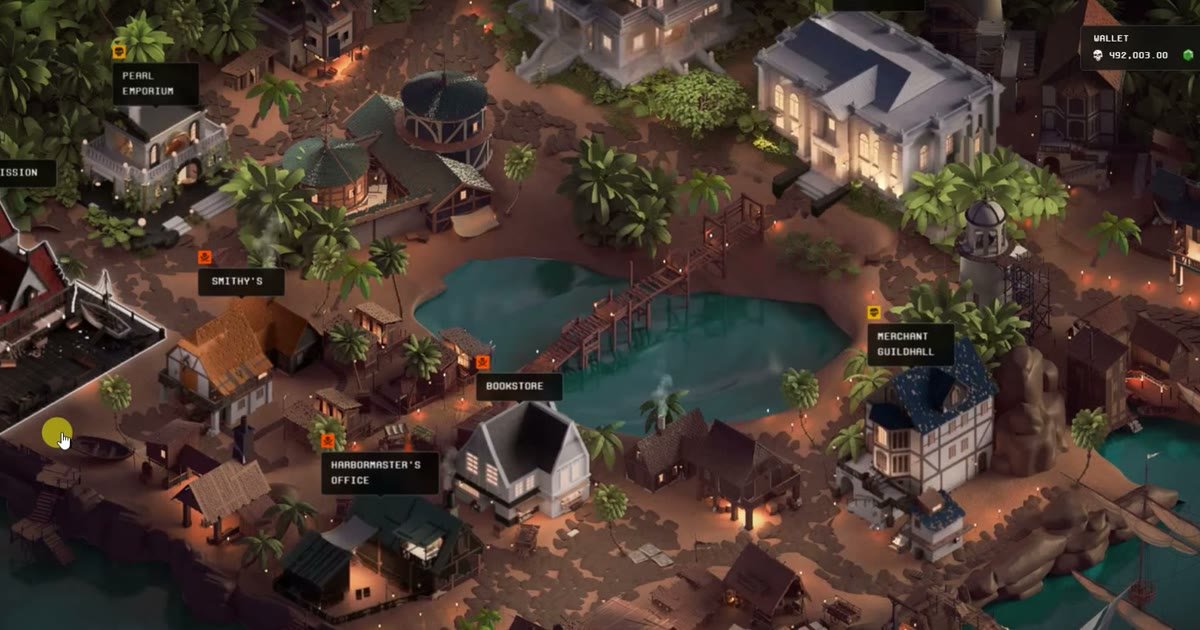
For a visual reference, the historical Reavers capture shows the Port Raventide map with location markers and a wallet-linked balance. A producer can point to the map and ask for movement and selection in the first milestone. Inventory trading, character progression, and a marketplace are separate estimates. Reavers footage and project notes
Price the moment the item changes hands
Decide whether the item stays in the player's game inventory or can move to another wallet. In the first version, the server can grant the reward and restore it on the next login. In the transferable version, identify who signs, who pays the transaction fee, and what the inventory displays while settlement is pending.
Ask both studios to demonstrate what happens when the player closes the tab after signing, then returns. A passing build shows the settled reward once or tells the player what is still pending. Price the work to reconcile those states alongside the happy path. The engineering decision is explored in our guide to on-chain and off-chain game state.
Put the bids on one sheet
- Playable build. Ask for one encounter, the target browser and device, the supplied art, and a save-and-resume demonstration. Request separate prices for extra maps or platforms.
- Transferable item. Request an incremental estimate for wallet connection, signing, transaction status, and recovery. If players can trade, name the trading surface and its operator.
- Release and operations. Assign owners for hosting, chain access, monitoring, and player support. Ask which charges recur and which usage assumption drives each charge.
For example, if you expect 2,000 completed missions per month and only one in four rewards is claimed on chain, your planning input is 500 claims. Price the transactions each claim requires. List account creation separately if only first-time claimants need it. These are sample volumes you can replace with your own. Solana cost calculator
Compare what each price buys
A cheaper quote may be the right choice if the first milestone is a playtest and player-owned items can wait. For a release where trading is central, a quote that leaves settlement recovery to “post-launch support” needs another line item. Ask each studio for the price of passing the same return-to-inventory test, the exclusions in writing, and the monthly bill at your sample volume. Builderz build budgets and exclusions